- Integrated Planning
Integrated Planning
Integrated planning is a sustainable approach to planning that builds relationships, aligns the organization, and emphasizes preparedness for change.
- Topics
Topics
- Resources
Resources
Featured Formats
Popular Topics
- Events & Programs
Events & Programs
Upcoming Events
- Community
Community
The SCUP community opens a whole world of integrated planning resources, connections, and expertise.


- Integrated Planning
Integrated Planning
Integrated planning is a sustainable approach to planning that builds relationships, aligns the organization, and emphasizes preparedness for change.
- Topics
Topics
- Resources
Resources
Featured Formats
Popular Topics
- Events & Programs
Events & Programs
Upcoming Events
- Community
Community
The SCUP community opens a whole world of integrated planning resources, connections, and expertise.
 Planning for Higher Education Journal
The Journeys Toward Utopia
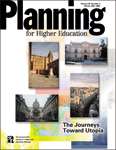 From Volume 30 Number 2 | Winter 2001–2002By Pablo Campos
Institutions referenced in this resource:
University of Bologna, University of Cambridge, University of Alcalá, University of Michigan-Ann Arbor, University of Virginia-Main Campus, Stanford UniversityThe purpose of this article is to emphasize the concept of utopia, which universities have used throughout history in developing their “spaces of knowledge.” This concept should continue to be an objective in the 21st century as universities look for paradigms in the architectural layout of their institutions. The implicit principle of this article is that good architecture is a necessary component in achieving educational excellence.
MEMBERS ONLY
Attention Members: Log in to access this item.Not a member? Join now to access this article and all journal articles for free. - Topics
- Topics

- Integrated Planning
Integrated Planning
- Topics
Topics
- Resources
- Topics


