- Integrated Planning
Integrated Planning
Integrated planning is a sustainable approach to planning that builds relationships, aligns the organization, and emphasizes preparedness for change.
- Topics
Topics
- Resources
Resources
Featured Formats
Popular Topics
- Events & Programs
Events & Programs
Upcoming Events
- Community
Community
The SCUP community opens a whole world of integrated planning resources, connections, and expertise.


- Integrated Planning
Integrated Planning
Integrated planning is a sustainable approach to planning that builds relationships, aligns the organization, and emphasizes preparedness for change.
- Topics
Topics
- Resources
Resources
Featured Formats
Popular Topics
- Events & Programs
Events & Programs
Upcoming Events
- Community
Community
The SCUP community opens a whole world of integrated planning resources, connections, and expertise.
 Planning for Higher Education Journal
Campus Historic Preservation and Adaptive Reuse
Leverage These Tools to Achieve Your Planning and Sustainability Goals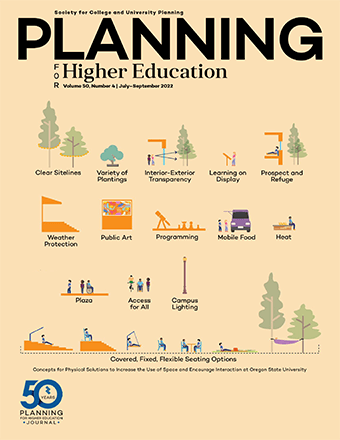 From Volume 50 Number 4 | July–September 2022By Meaghan Finney, MS, and Michael Patrick, M.Arch, AIA, NCARB, LEED APPlanning Types: Campus PlanningChallenges: Dealing with Climate ChangeTags: Adaptive Reuse, Energy Infrastructure, Facilities Design, Facilities Planning, Historic Preservation, Informal Learning Environments, Leadership in Energy and Environmental Design (LEED), Learning Environments, Renovation, Sustainability (Environmental)
Institutions referenced in this resource:
University of Kentucky, Macalester College, Agnes Scott College, University of California-Berkeley, Arizona State University-Tempe, Università Ca’ Foscari Venezia, Fairleigh Dickinson University-Metropolitan CampusHistoric campus buildings are often perceived as a burden, but by integrating them into your campus planning, their continued reuse can help solve some of the specific challenges facing university planners today, specifically in the context of sustainability. There are numerous case studies that demonstrate the successful adaptive reuse of varied campus buildings as well as an undeniable body of evidence showing the benefits of such an approach in working toward carbon neutrality. As long-term stewards of their built environments, colleges and universities are uniquely positioned to realize enduring savings from investing in the energy performance of existing buildings.
MEMBERS ONLY
Attention Members: Log in to access this item.Not a member? Join now to access this article and all journal articles for free. - Topics
- Topics

- Integrated Planning
Integrated Planning
- Topics
Topics
- Resources
- Topics


